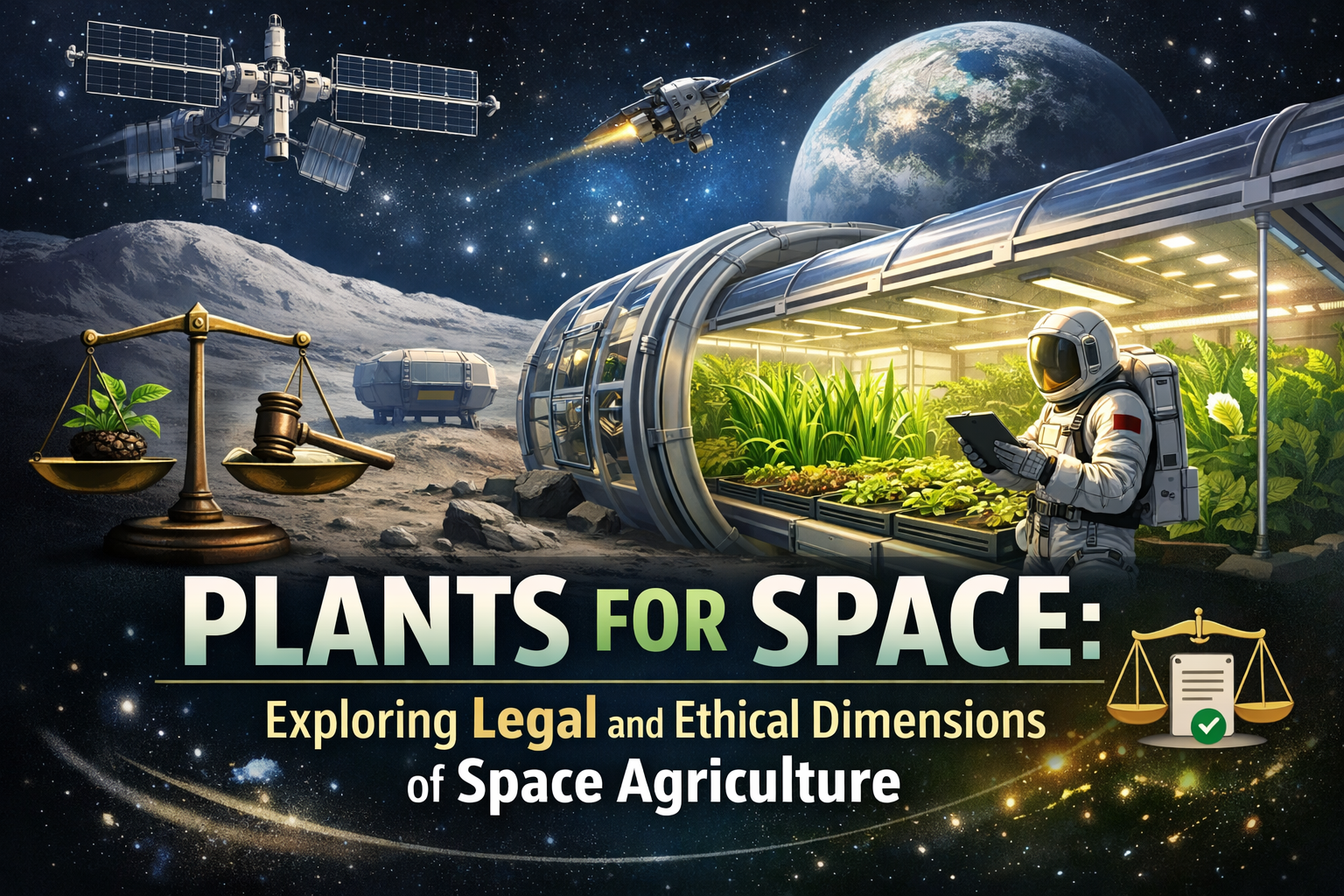
Dr Langston will be presenting current research on the topic “Plants for Space: Exploring Legal and Ethical Dimensions of Space Agriculture.” This paper is coauthored with Dr Melissa de Zwart, Plants4Space, University of Adelaide.
Abstract
Plants for Space: Exploring the Legal and Ethical Dimensions of Space Agriculture
Current ambitions to return humans to the Moon and to expand human spaceflight capabilities through orbital space stations and deep-space missions—driven by both governmental and private interests—require the development of infrastructure and resources capable of sustaining a long-term human presence beyond Earth. Central to these efforts is the advancement of space agriculture: the development and adaptation of food systems and agricultural products that can survive and thrive in microgravity and extraterrestrial environments. While the advancement and scaling of this field presents inherent technical and scientific challenges, space agriculture also raises a range of underexplored legal, ethical, and societal questions. This paper presents the cultivation of plants for space as constituting a novel domain of human–environment interaction that demands careful normative and regulatory evaluation. It evaluates three interrelated categories of concern: (1) environmental considerations, including plant viability, sustainability, and planetary protection; (2) regulatory challenges, particularly the adequacy of existing legal and licensing frameworks governing space activities and agricultural products; and (3) ethical implications for humanity, including evolving conceptions of nature, stewardship, and human relationships with both terrestrial and extraterrestrial environments and plants.
This paper will provide an overview of current scientific efforts to adapt plants as viable food sources for space missions, highlighting ongoing research initiatives in Australia, Japan, the United States, and Europe. Second, it examines applicable international and national legal frameworks, identifying regulatory gaps, ambiguities and challenges that emerge when agricultural activities are conducted beyond Earth. Finally, the paper explores the ethical dimensions of space agriculture, drawing on bioethics, environmental ethics, cultural sensitivity and inclusivity, space sustainability, and questions of equitable access to essential resources. By bringing legal analysis into dialogue with philosophical inquiry, this paper seeks to illuminate the broader implications of space agriculture and to stimulate informed interdisciplinary discussion in support of future research and policy development.